Tenses
Tense shows the time of an action or state. English has present, past, and future time, and each of these can appear in simple, continuous, perfect, and perfect continuous forms.
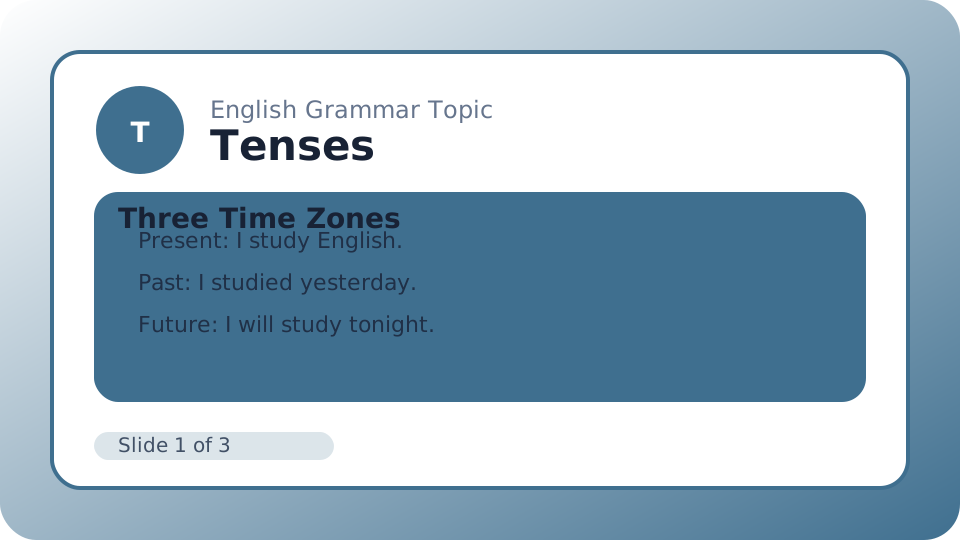
Visual Guide
Tap to view the presentation slides
Video Lesson
Watch a guided explanation
Audio Recap
Listen to a quick 60-second summary
Why learning tenses is important
- Show when an action happens.
- Explain whether an action is complete, continuing, repeated, or connected to another time.
- Help speakers describe habits, plans, experiences, and sequences clearly.
- Support accurate narration and explanation.
| Type | Definition | Example |
|---|---|---|
| Simple Present | habit, truth, routine | She walks to school. |
| Present Continuous | action happening now | She is walking now. |
| Present Perfect | completed with present link | She has walked home. |
| Simple Past | finished past action | She walked yesterday. |
| Past Continuous | ongoing action in the past | She was walking at 5 pm. |
| Past Perfect | action completed before another past action | She had walked before sunset. |
| Simple Future | future plan or prediction | She will walk tomorrow. |
| Future Continuous | action in progress in the future | She will be walking at noon. |
Present Tenses
Present forms talk about habits, current actions, completed actions connected to now, and duration up to now.
| Tense | Form | Use | Example |
|---|---|---|---|
| Simple Present | base / base+s | habit or fact | He reads daily. |
| Present Continuous | am/is/are + verb-ing | action happening now | He is reading now. |
| Present Perfect | has/have + past participle | completed with present result | He has read the chapter. |
| Present Perfect Continuous | has/have been + verb-ing | ongoing action with duration | He has been reading for two hours. |
Examples in Context
- The earth revolves around the sun.
- They are preparing for the annual day.
- She has lived here since 2020.
Past Tenses
Past forms describe finished actions, actions in progress in the past, earlier past actions, and duration before a point in the past.
| Tense | Form | Use | Example |
|---|---|---|---|
| Simple Past | verb-ed / irregular form | finished action | They visited Mysuru last year. |
| Past Continuous | was/were + verb-ing | past action in progress | They were visiting relatives at noon. |
| Past Perfect | had + past participle | earlier past action | They had visited before the festival began. |
| Past Perfect Continuous | had been + verb-ing | duration before a past time | They had been waiting for an hour. |
Examples in Context
- I finished the assignment yesterday.
- She was cooking when the guests arrived.
- The train had left before we reached the station.
Future Tenses
Future forms talk about plans, predictions, future actions in progress, completed future actions, and ongoing future duration.
| Tense | Form | Use | Example |
|---|---|---|---|
| Simple Future | will + base verb | future action or prediction | I will call you tomorrow. |
| Future Continuous | will be + verb-ing | future action in progress | I will be travelling at noon. |
| Future Perfect | will have + past participle | action completed before future time | I will have finished by 6 pm. |
| Future Perfect Continuous | will have been + verb-ing | future duration | I will have been working here for five years in June. |
Examples in Context
- We will start the workshop at ten.
- They will be waiting outside the hall.
- She will have completed the course by next month.
Time Markers and Common Errors
Tense choice becomes easier when you notice signal words and the order of events in the sentence.
RULE 1: Use the simple present for routines and truths, not the present continuous: Water boils at 100 degrees Celsius.
RULE 2: Use the present perfect with since and for when the action started in the past and continues to the present.
RULE 3: Use the past perfect only when you need to show that one past action happened before another past action.
Examples in Context
- Incorrect: I am knowing the answer. Correct: I know the answer.
- Incorrect: She has gone yesterday. Correct: She went yesterday.
- Correct: By the time I arrived, the film had started.
Practice Exercises
Test your understanding of this concept.
Q: Q1. Name the tense: They are playing in the garden.
Answer: Present Continuous
Q: Q2. Fill in the blank: She ________ the letter before dinner. (finish)
Answer: finished / had finished depending on context
Q: Q3. Write the future perfect form of complete.
Answer: will have completed